The Journal
A guide to laying: patterns, materials, techniques.
What almost twenty years on site have taught us, written simply. To choose with confidence, and to know what to expect from a craftsman.
Laying patterns
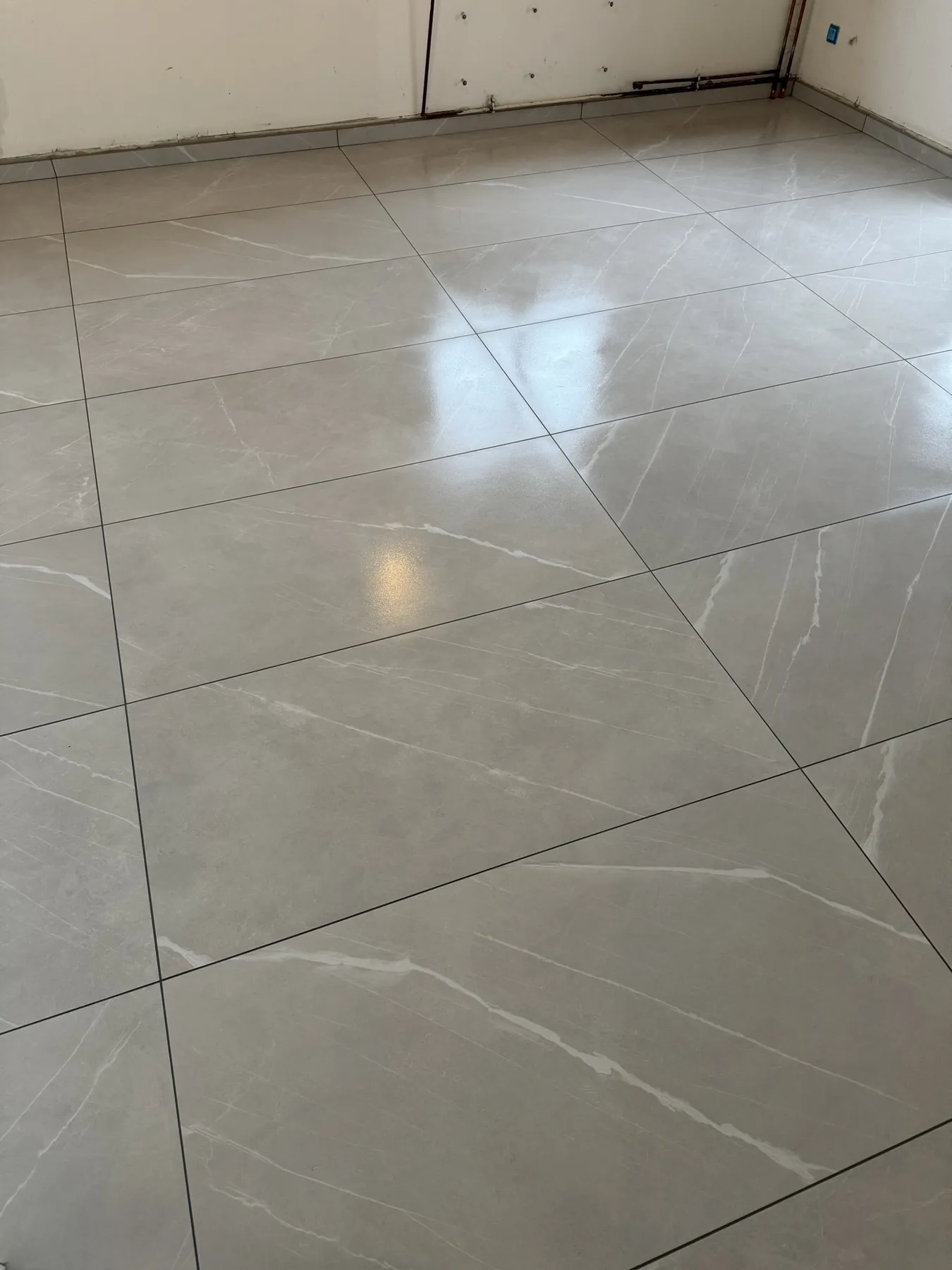
Straight lay
Tiles are aligned in rows and columns, with continuous joints in both directions. It is the calmest pattern, and the most demanding for the eye.
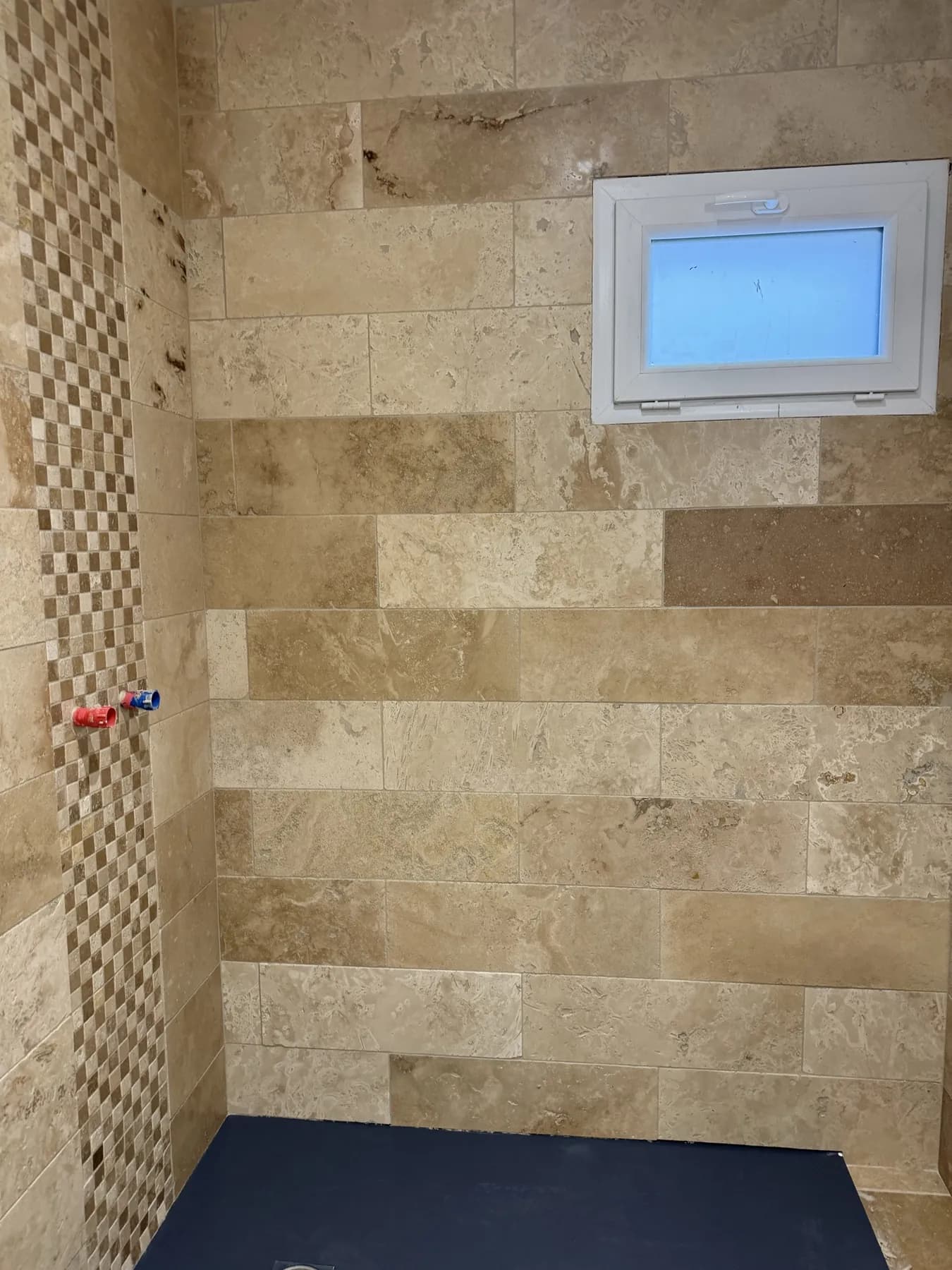
Offset lay, third or half bond
Each row is offset by a fraction of a tile, like a brick wall. A plank effect, in stone or porcelain.
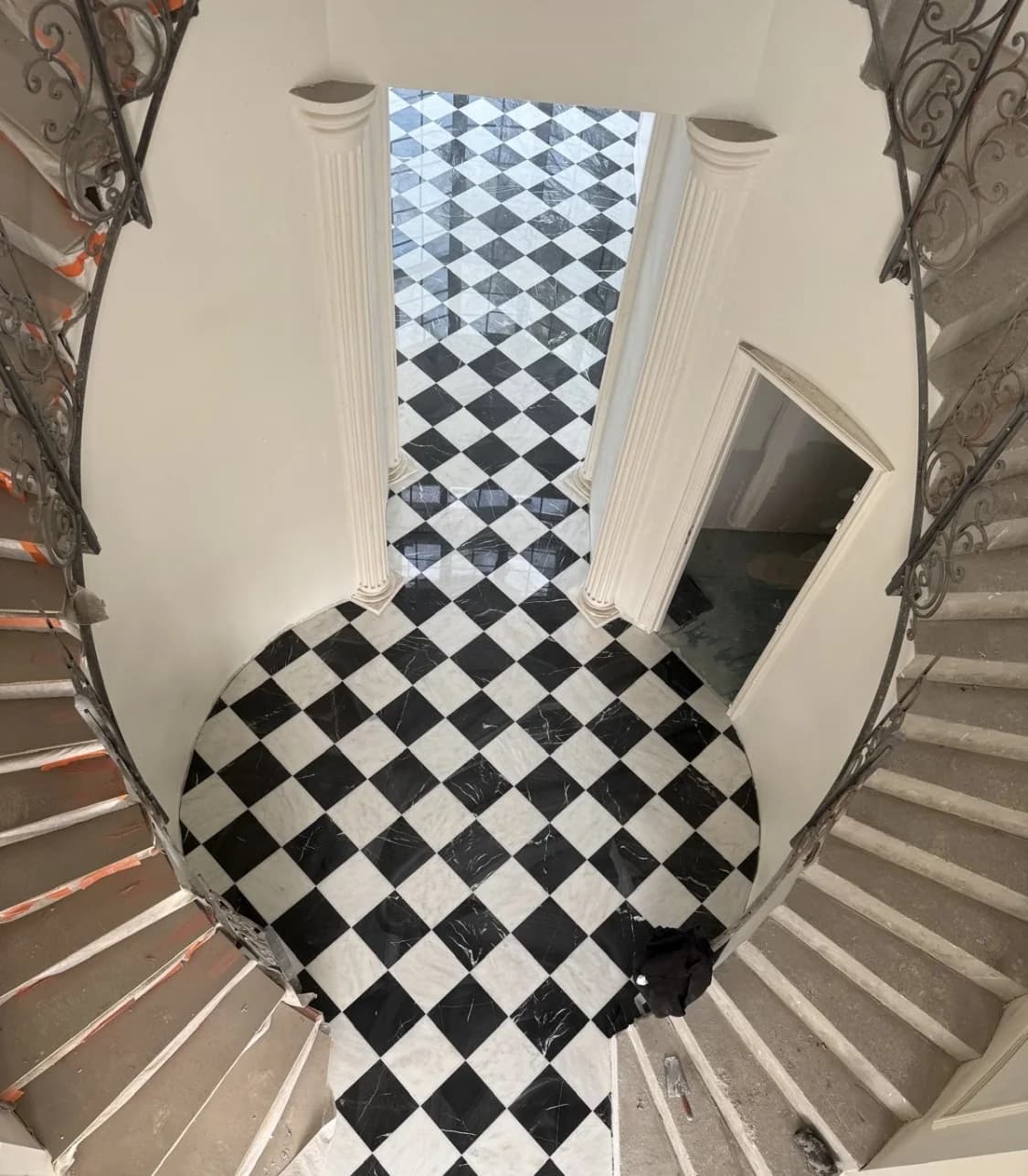
Diagonal lay
Tiles are laid at 45 degrees to the walls. It makes a room feel larger and breaks up a narrow space.
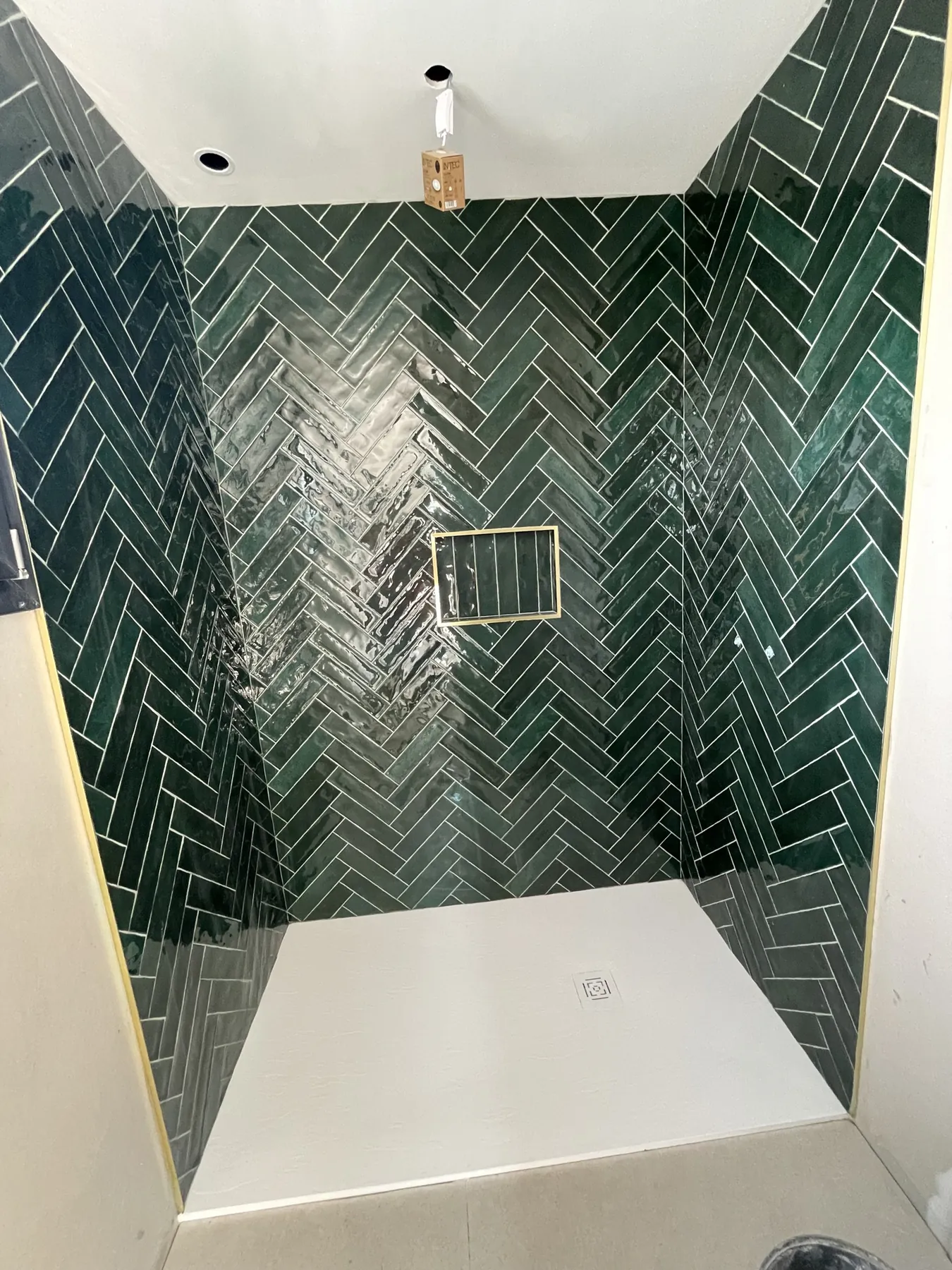
Herringbone
Rectangular planks laid at right angles to each other in an offset zigzag. The classic for halls and living rooms, in stone or porcelain.
Chevron, point de Hongrie
Planks with ends cut on the bias, at 45 or 60 degrees, butted into a continuous line of points. Large rooms, perspective, classic elegance.
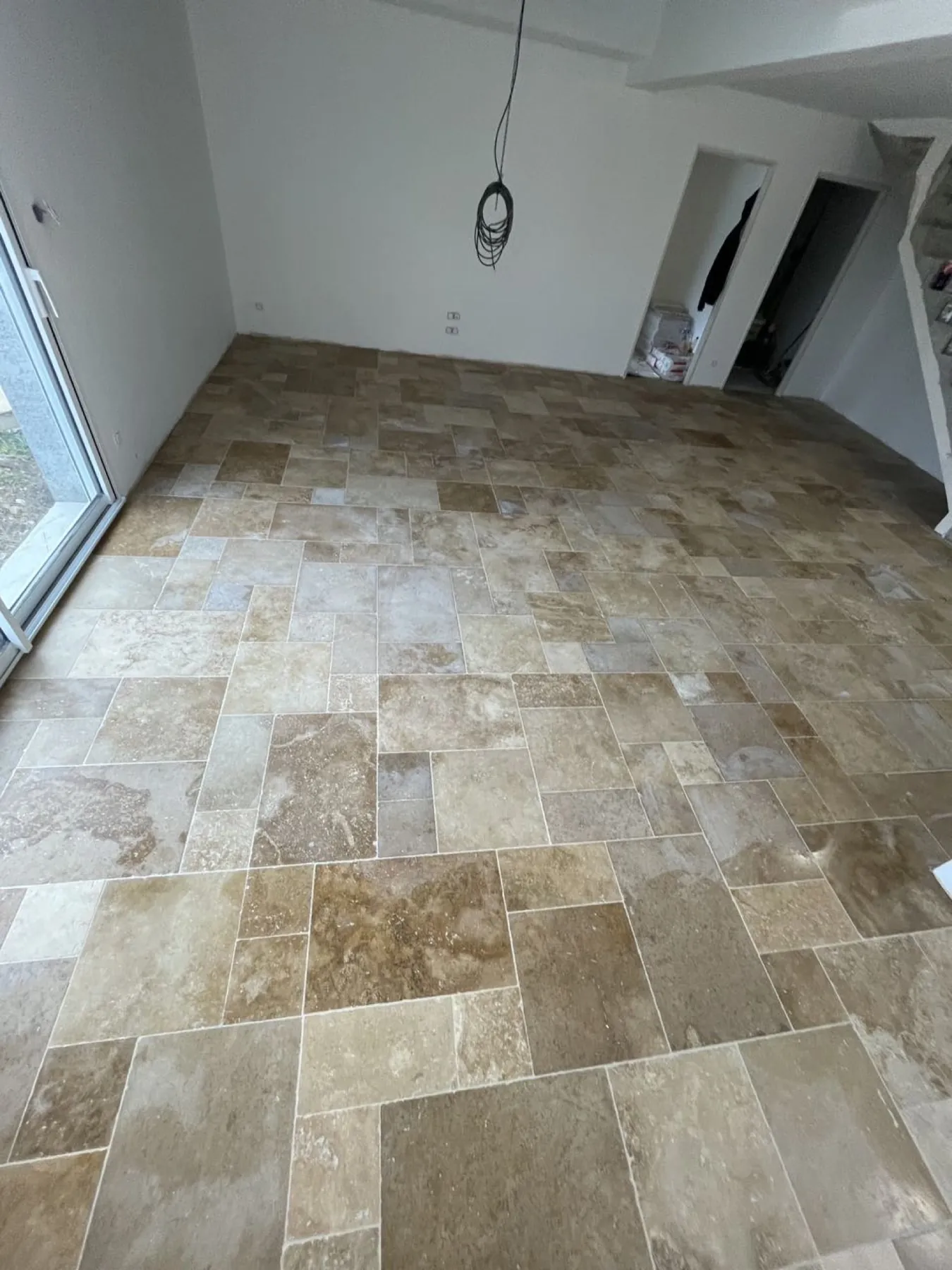
Opus romanum
A repeating composition of several formats, often four, giving an irregular look while staying modular. The pattern of travertine and homes with character.
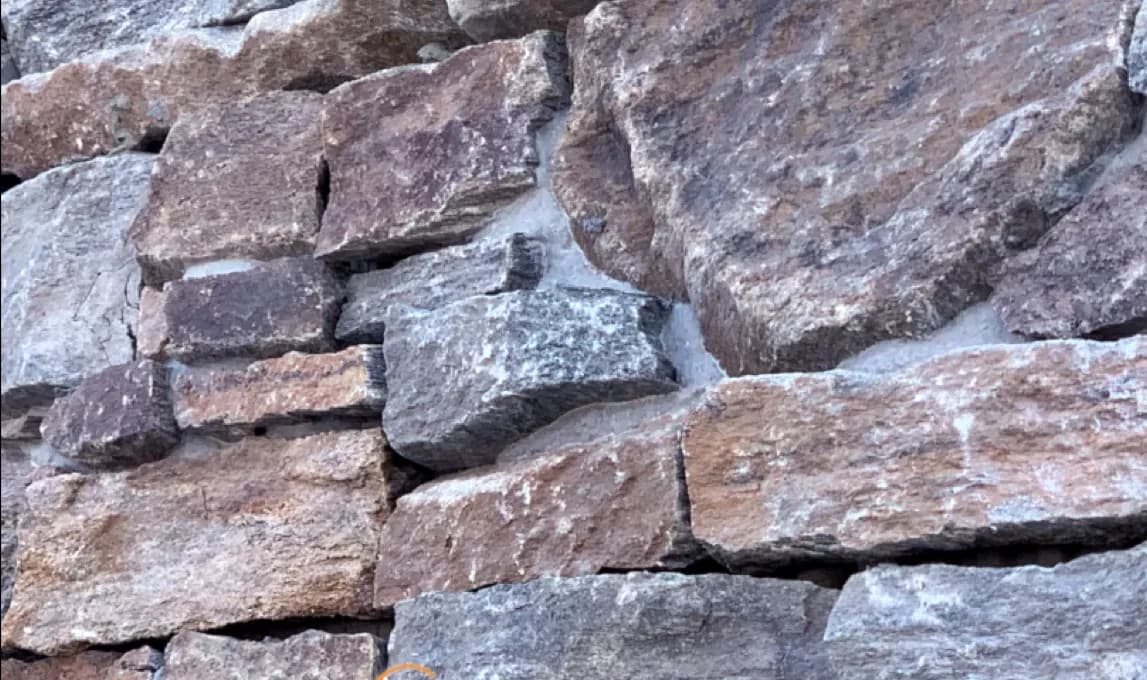
Opus incertum
Irregular stone pieces fitted by hand. The most natural of patterns, and the longest to do well.
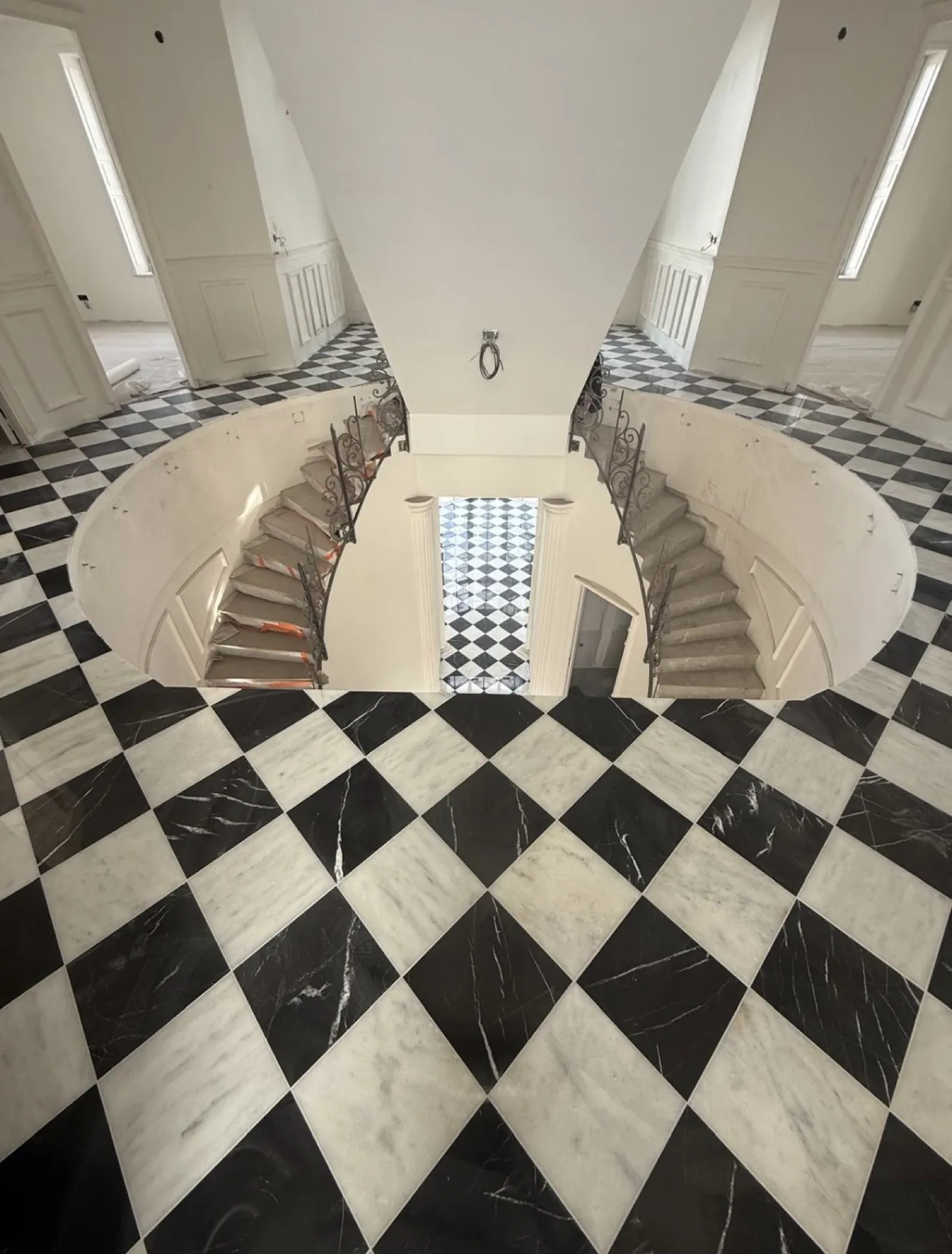
Chequerboard
Two colours or two materials alternating like a chessboard. The classic black and white marble entrance.
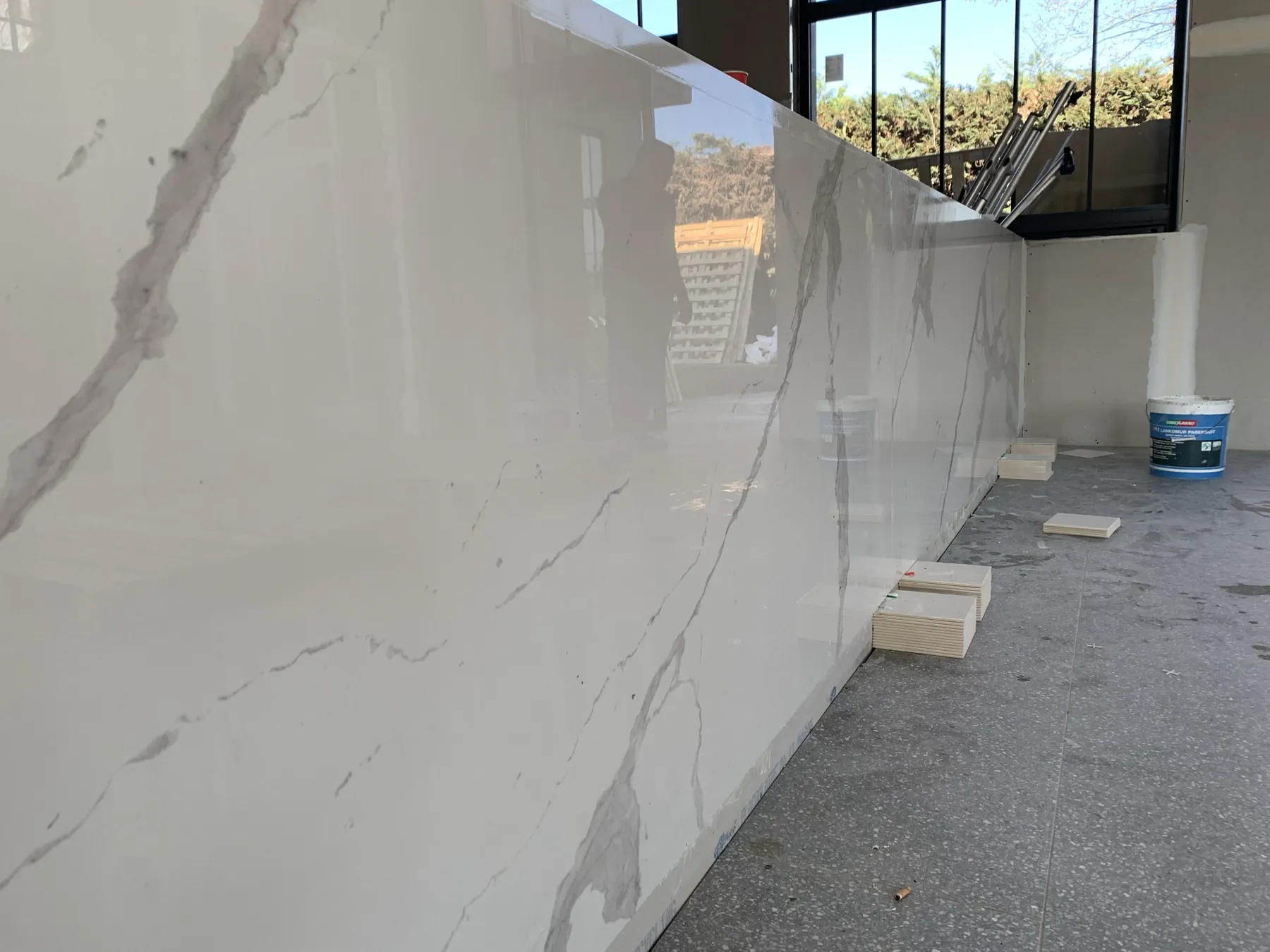
Vertical or horizontal wall lay
The orientation of the long side of the tiles on the wall. Vertical to raise a ceiling, horizontal to widen a room.
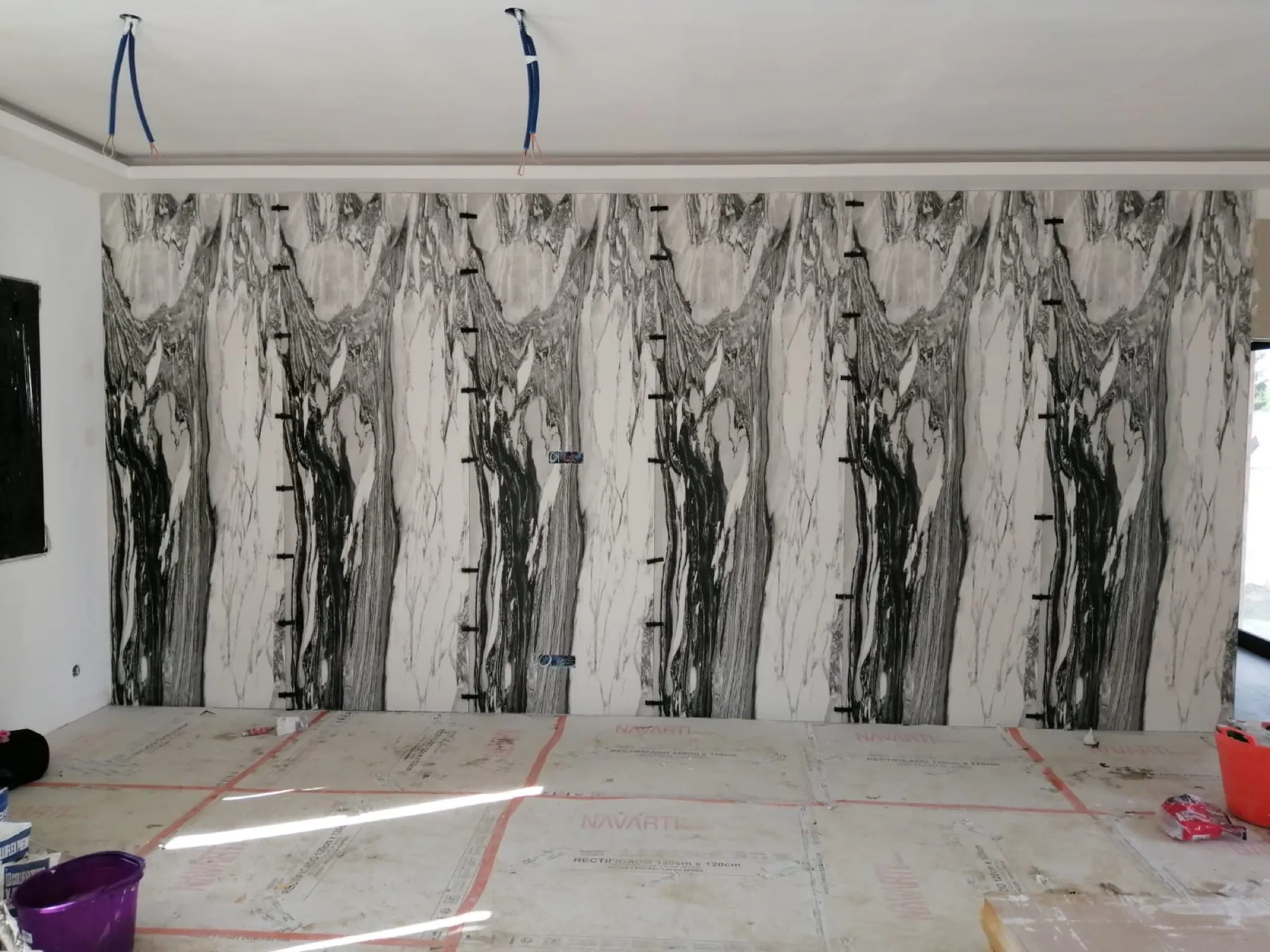
Book-match
Two consecutive slabs from the same block, opened like a book, with veins that mirror each other. The signature wall.
Materials
Marble
A metamorphic rock of limestone origin, with spectacular veining.
Travertine
A limestone formed by spring deposits, recognisable by its pores. It comes filled or unfilled, honed, tumbled or brushed.
Limestone
A sedimentary rock in soft, pale tones, with hardness that varies widely from one quarry to another.
Granite
A very hard igneous rock.
Slate
A dark, layered metamorphic rock with natural relief.
Quartzite
A quartz-rich metamorphic rock that looks close to marble.
Porcelain
A very dense, very low porosity ceramic, glazed or full body.
Large format porcelain and slabs
Large format usually means above 60 x 60 cm, and slabs range from 120 x 240 to 160 x 320 cm, 6 to 20 mm thick.
Natural stone cladding
Strips or panels of stone, schist, quartzite, limestone or sandstone, bonded or fixed to a wall.
Cast stone cladding
Moulded elements made of mortar and aggregates that reproduce the look of stone.
Techniques
Thin-bed installation with back-buttering
Tile adhesive is applied to the substrate and to the back of the tile.
Mortar bed installation
Tiles are laid on a mortar bed several centimetres thick, following NF DTU 52.1.
Pedestal paving
Outdoors, thick slabs, often 2 cm, rest on adjustable pedestals.
Uncoupling membrane
A membrane is bonded between the substrate and the tiles.
Laying on underfloor heating
The screed expands with heat: laying requires a precise protocol.
Tiled walk-in shower
An even fall, a drain suited to the format, continuous waterproofing under the tiles.
Waterproofing under tiles
Liquid membranes protect the walls and floors of wet rooms; reinforced systems treat more exposed floors, such as those above living spaces, according to their technical approvals.
Stone treatment and protection
A water repellent limits water penetration; an oil repellent limits grease.
Choosing a tiler for a high-end project
A beautiful tile badly laid is still a bad floor. Here is what we advise you to check before entrusting a stone, marble or large format project, whether to us or to someone else.
What sets the price of high-end tiling
We are often asked for a price per square metre. We do not give one, because it means nothing for a demanding project. Here is what really sets the price of a tiling job.
Porcelain tiles or natural stone?
Marble-effect porcelain or real marble, travertine-effect porcelain or real travertine: the question comes up on every project. There is no wrong answer, only different uses.
Glossary
- Back-buttering
- Applying adhesive to the back of the tile.
- Book-match
- Two slices from the same block laid as a mirror image.
- Brushed
- A lightly textured finish that brings out the natural relief.
- Bush-hammered
- A rough, slip-resistant finish obtained by hammering.
- Calibre
- The actual size of a tile within one batch.
- Filled
- Travertine whose pores have been filled.
- Flamed
- A rough finish obtained with a flame, for outdoor use.
- Flatness
- The evenness of a surface, measured with a 2 m straightedge and a 20 cm rule.
- Full body
- A tile whose colour runs through its whole thickness.
- Glazed
- A tile covered with a decorative vitrified layer.
- Handover
- The act by which the owner accepts the works, with or without snags. It starts the warranties.
- Honed
- A matt finish, smooth to the touch, obtained by light polishing.
- Layout plan
- A plan that sets the position of every tile, cut and joint before laying.
- Levelling compound
- A self-levelling floor compound that corrects the flatness of a substrate.
- Lippage
- A small height difference between two neighbouring tiles.
- Movement joint
- A joint that divides a large area to absorb movement.
- Perimeter joint
- A gap left against walls and obstacles, hidden by the skirting.
- Polished
- A shiny, mirror finish.
- Rectified
- A tile with ground edges and very precise dimensions.
- Screed
- The mortar layer that forms the base for the floor finish.
- Snag
- A defect noted at handover that the contractor must fix.
- Technical survey
- A paid on-site assessment carried out before the quote.
- Tile adhesive
- A cement-based adhesive classified by performance: bond, deformability, open time.
- Variation
- A signed document that changes the original quote: works, price, timing.
Tell us about your project.
Describe it, attach your plans and photos. We will get back to you personally.