Every pattern
The hardest pattern is often the one we like best.
A pattern changes everything in a room: it widens it, lengthens it, calms it or sets it in motion. We master them all, and we draw the layout before the first slab is laid. Choose a pattern to watch it take shape.
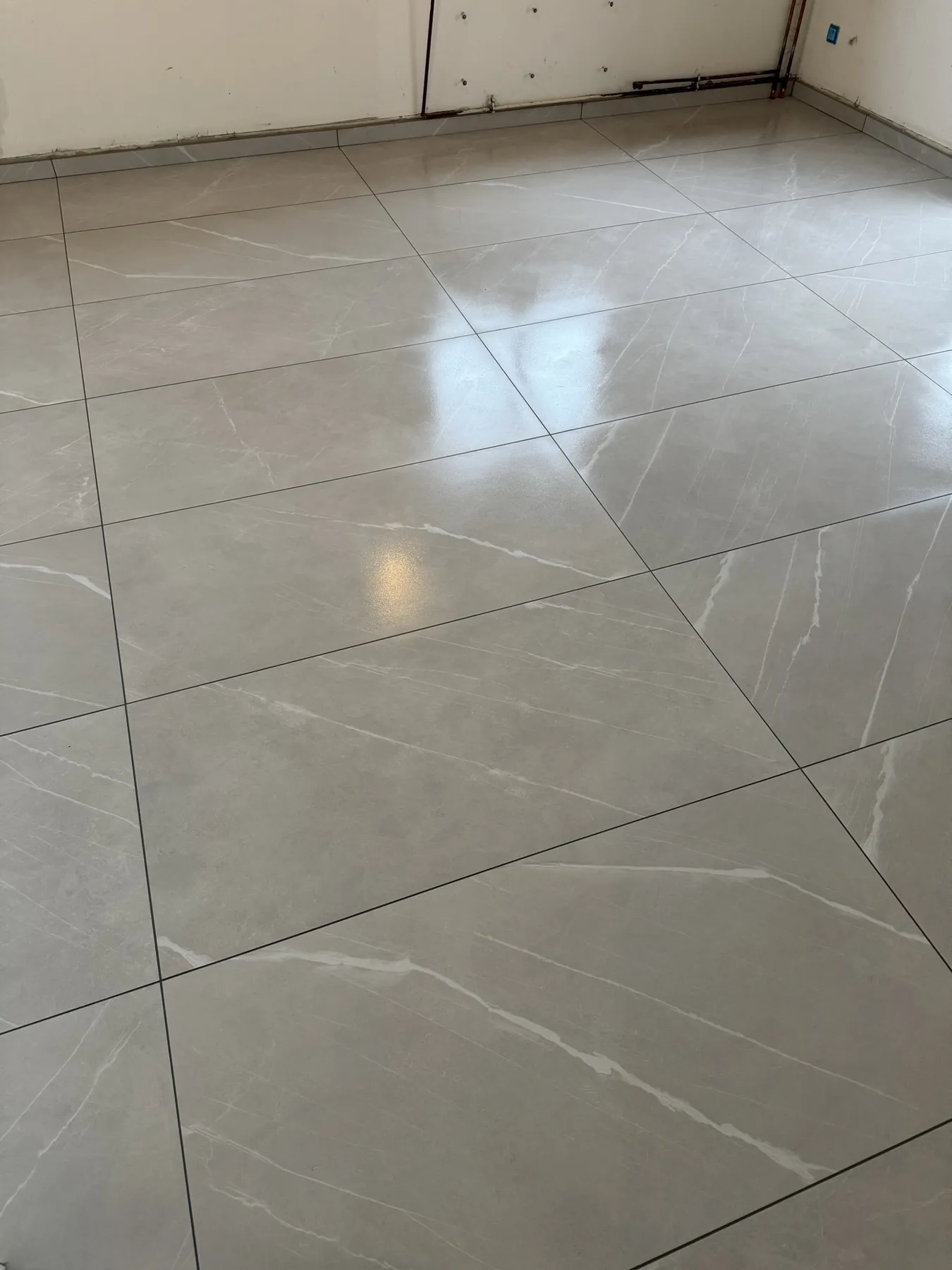
Straight lay
Tiles are aligned in rows and columns, with continuous joints in both directions. It is the calmest pattern, and the most demanding for the eye.
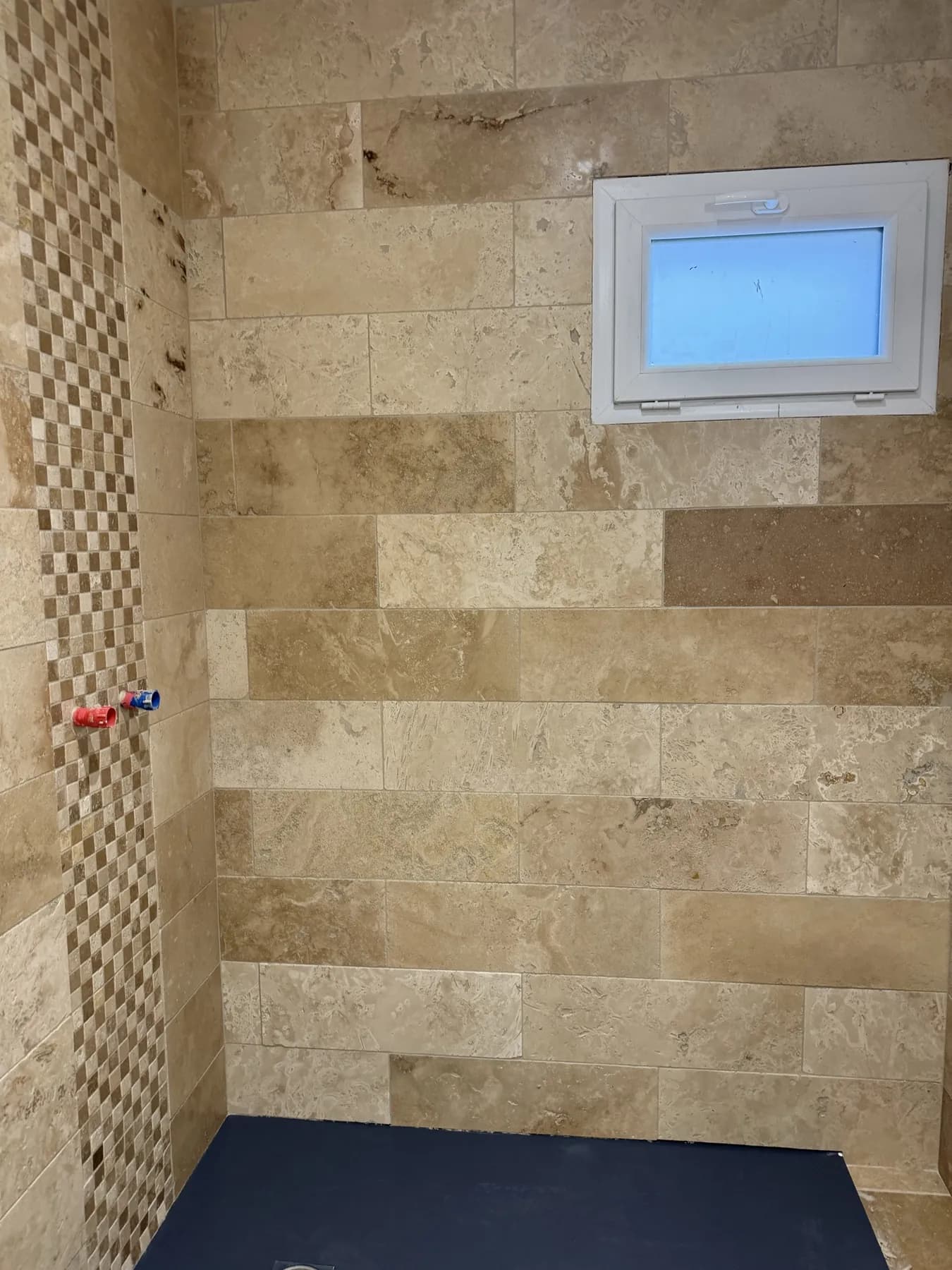
Offset lay, third or half bond
Each row is offset by a fraction of a tile, like a brick wall. A plank effect, in stone or porcelain.
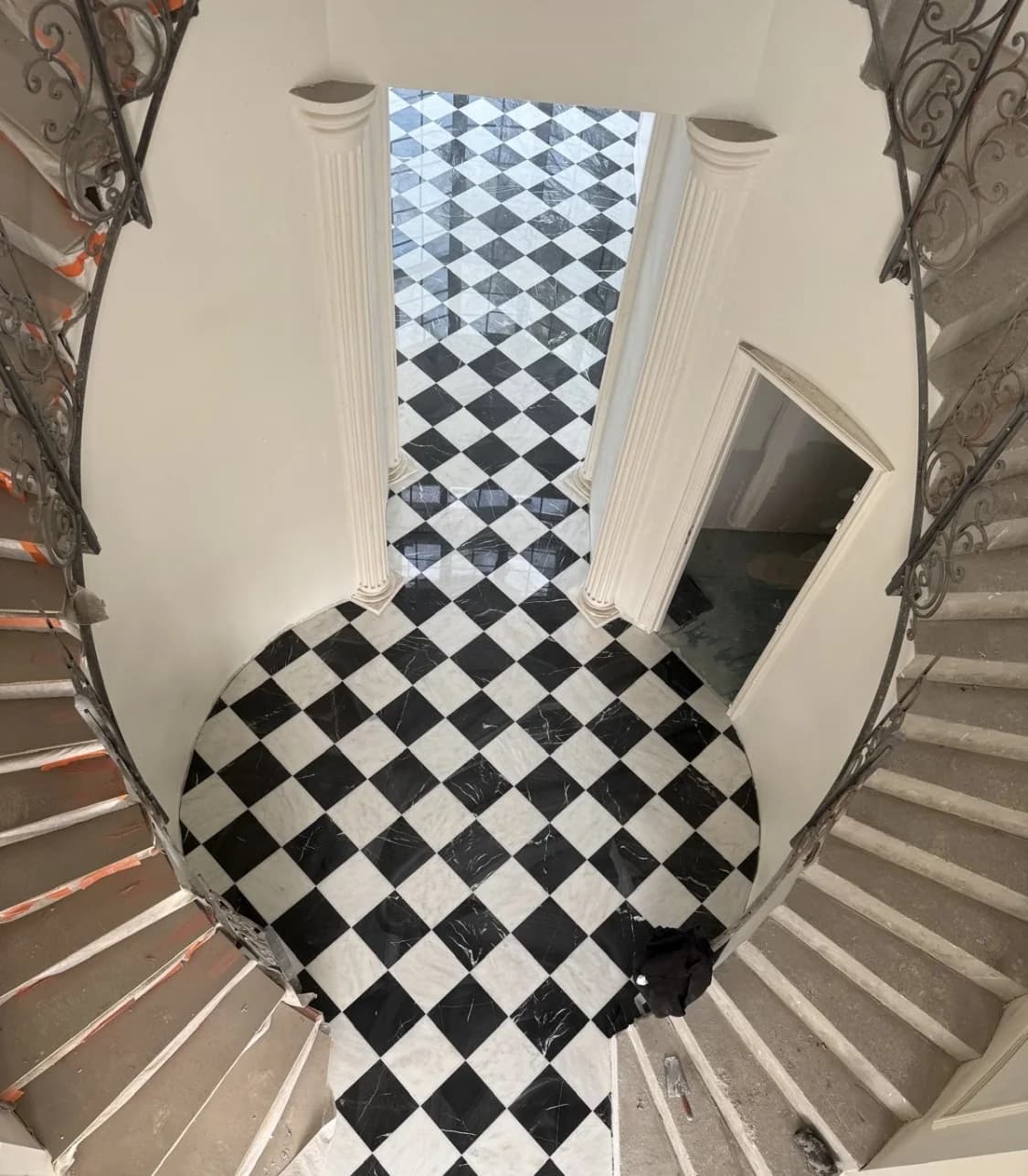
Diagonal lay
Tiles are laid at 45 degrees to the walls. It makes a room feel larger and breaks up a narrow space.
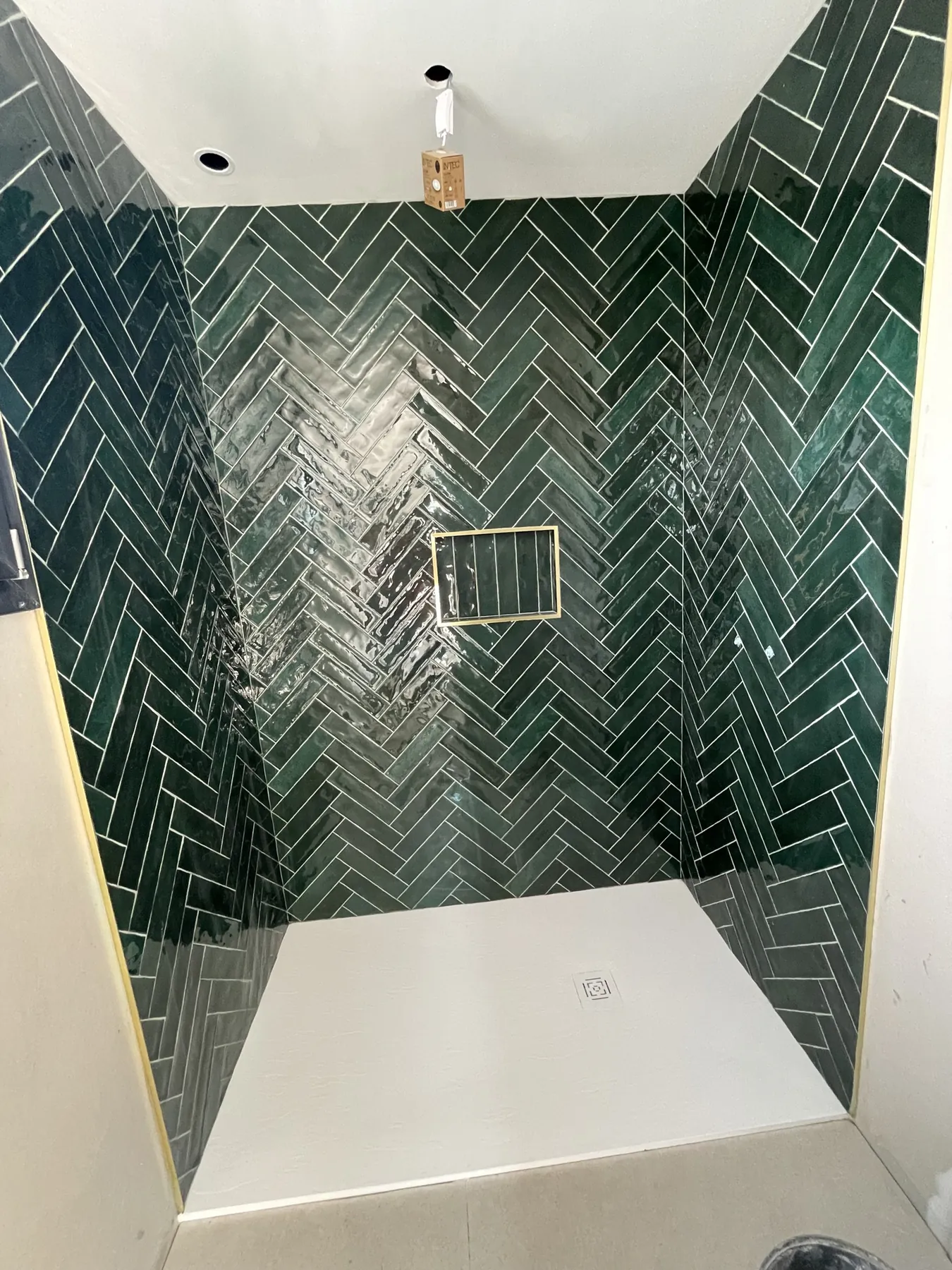
Herringbone
Rectangular planks laid at right angles to each other in an offset zigzag. The classic for halls and living rooms, in stone or porcelain.
Chevron, point de Hongrie
Planks with ends cut on the bias, at 45 or 60 degrees, butted into a continuous line of points. Large rooms, perspective, classic elegance.
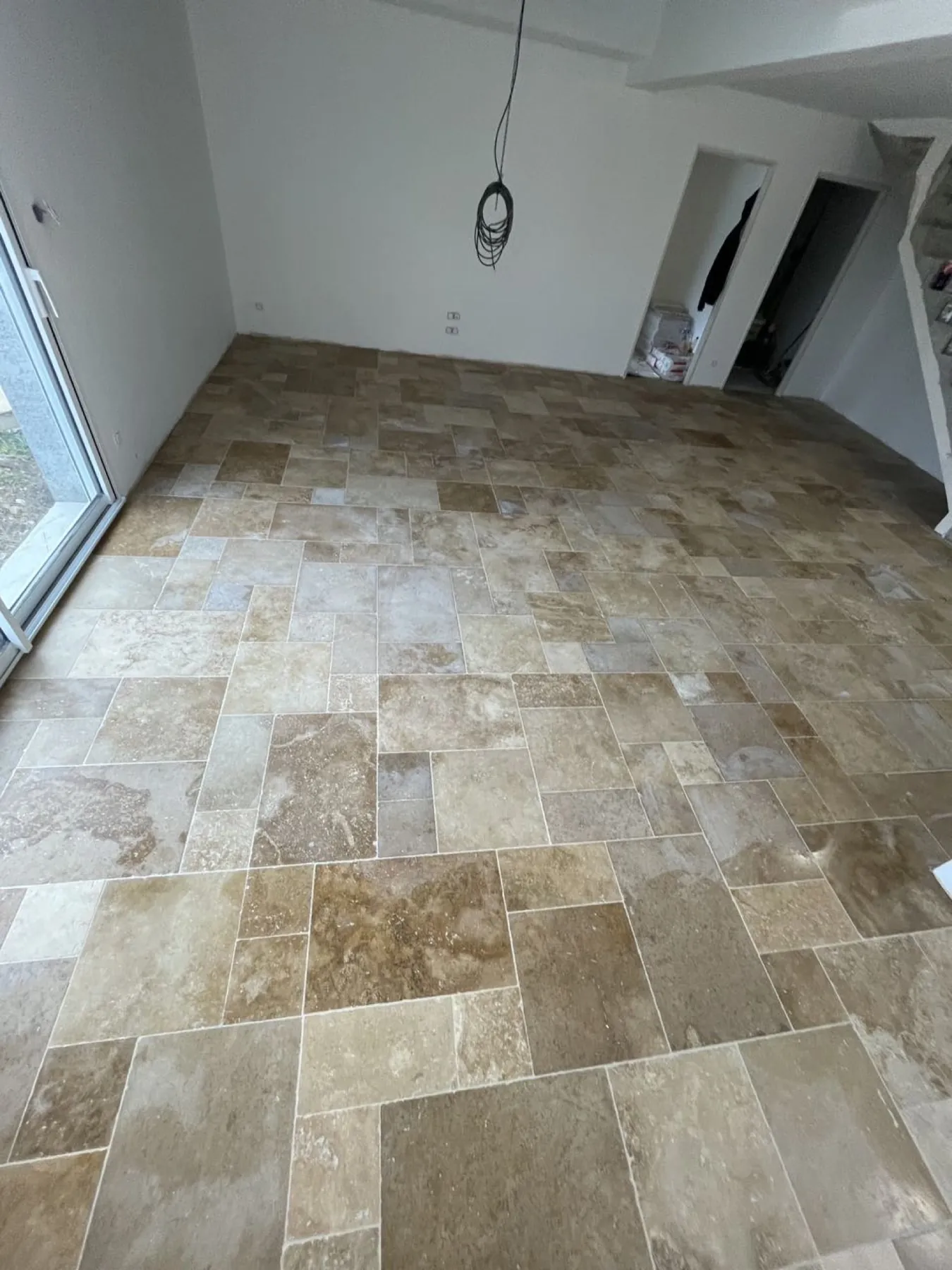
Opus romanum
A repeating composition of several formats, often four, giving an irregular look while staying modular. The pattern of travertine and homes with character.
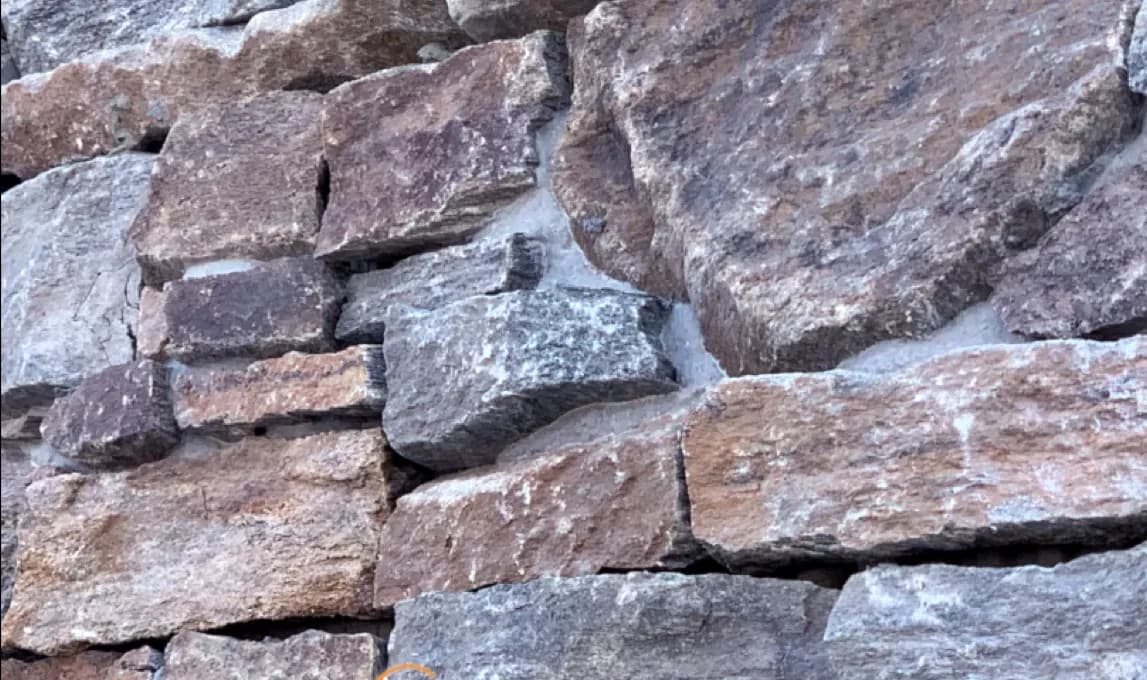
Opus incertum
Irregular stone pieces fitted by hand. The most natural of patterns, and the longest to do well.
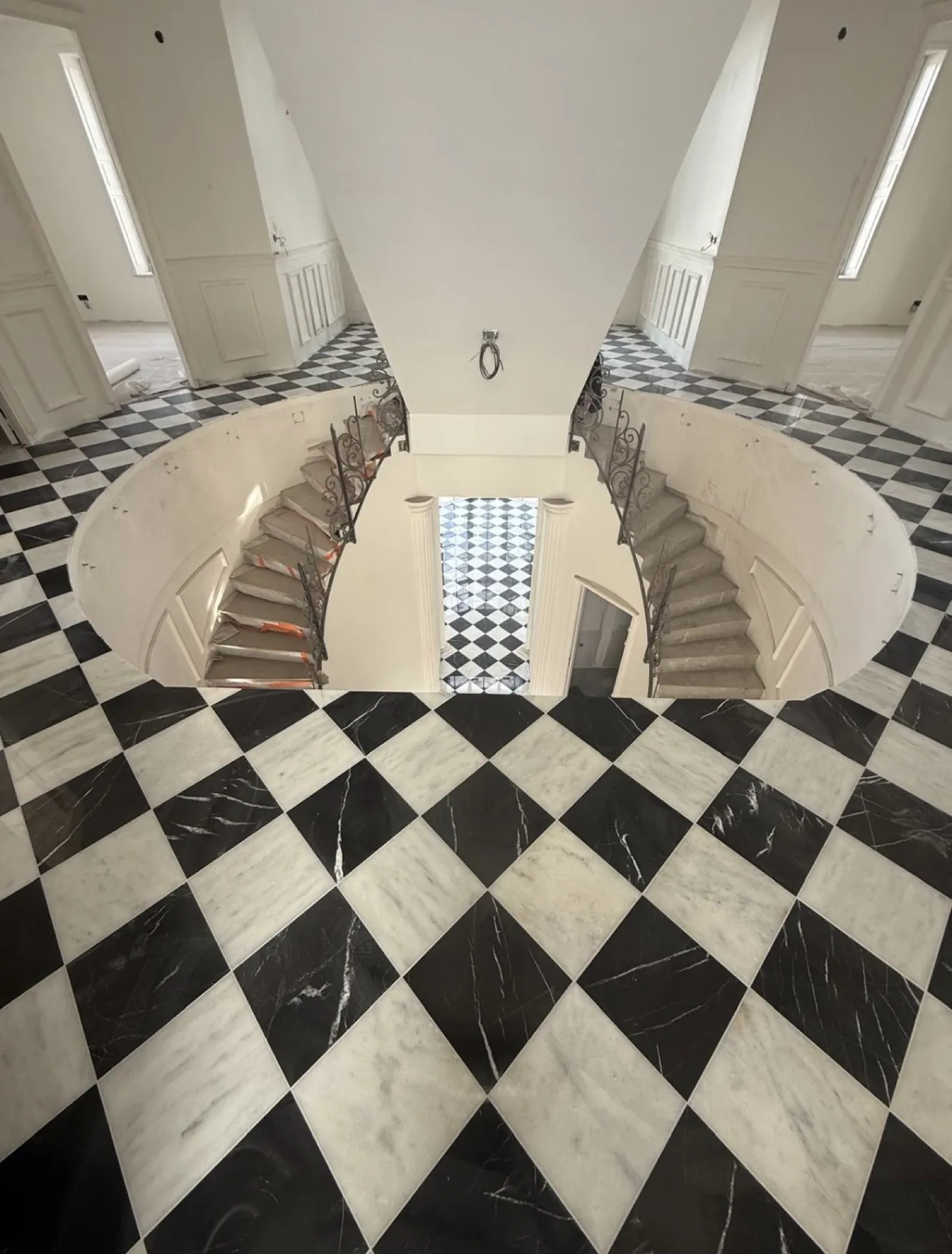
Chequerboard
Two colours or two materials alternating like a chessboard. The classic black and white marble entrance.
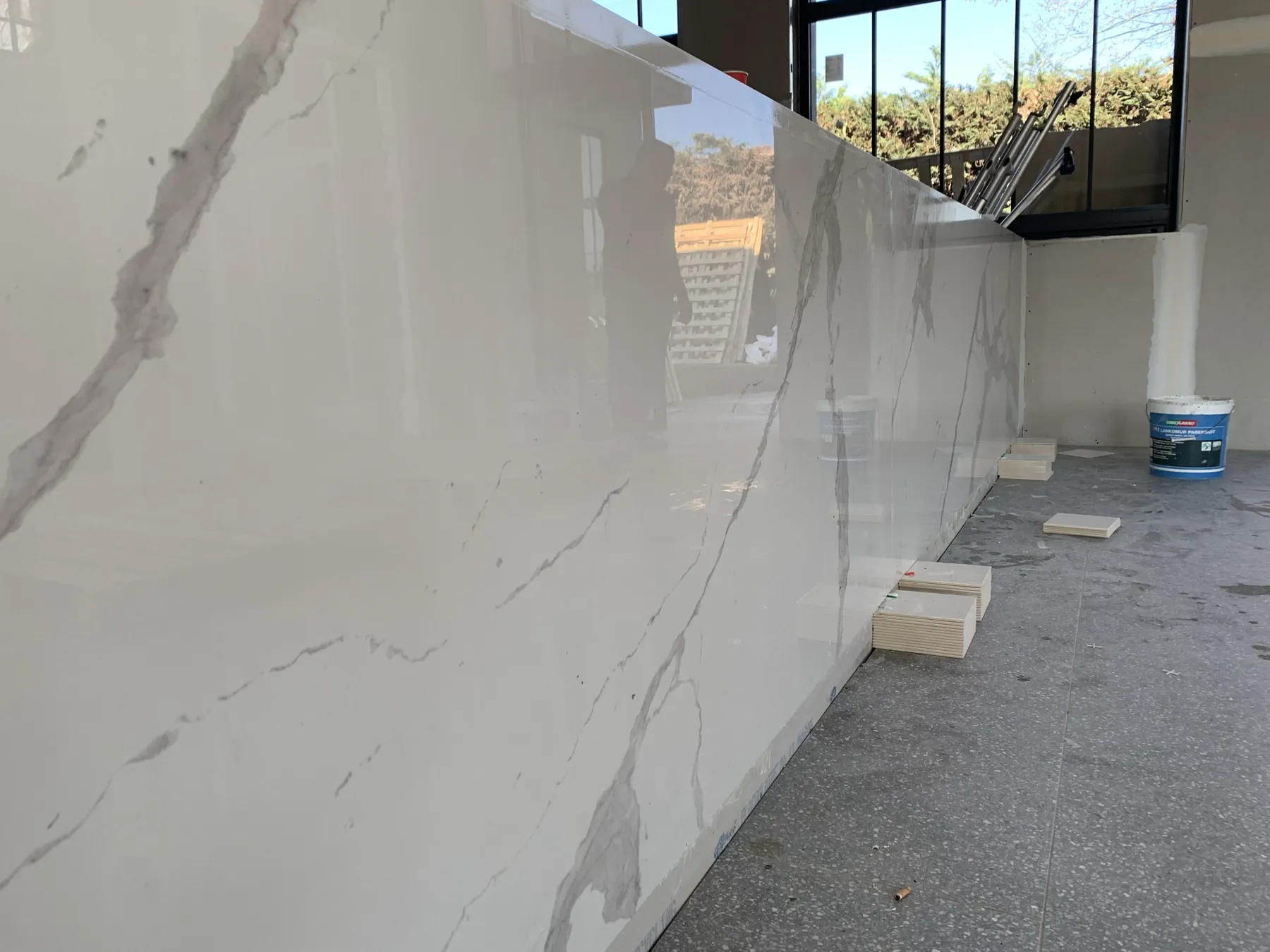
Vertical or horizontal wall lay
The orientation of the long side of the tiles on the wall. Vertical to raise a ceiling, horizontal to widen a room.
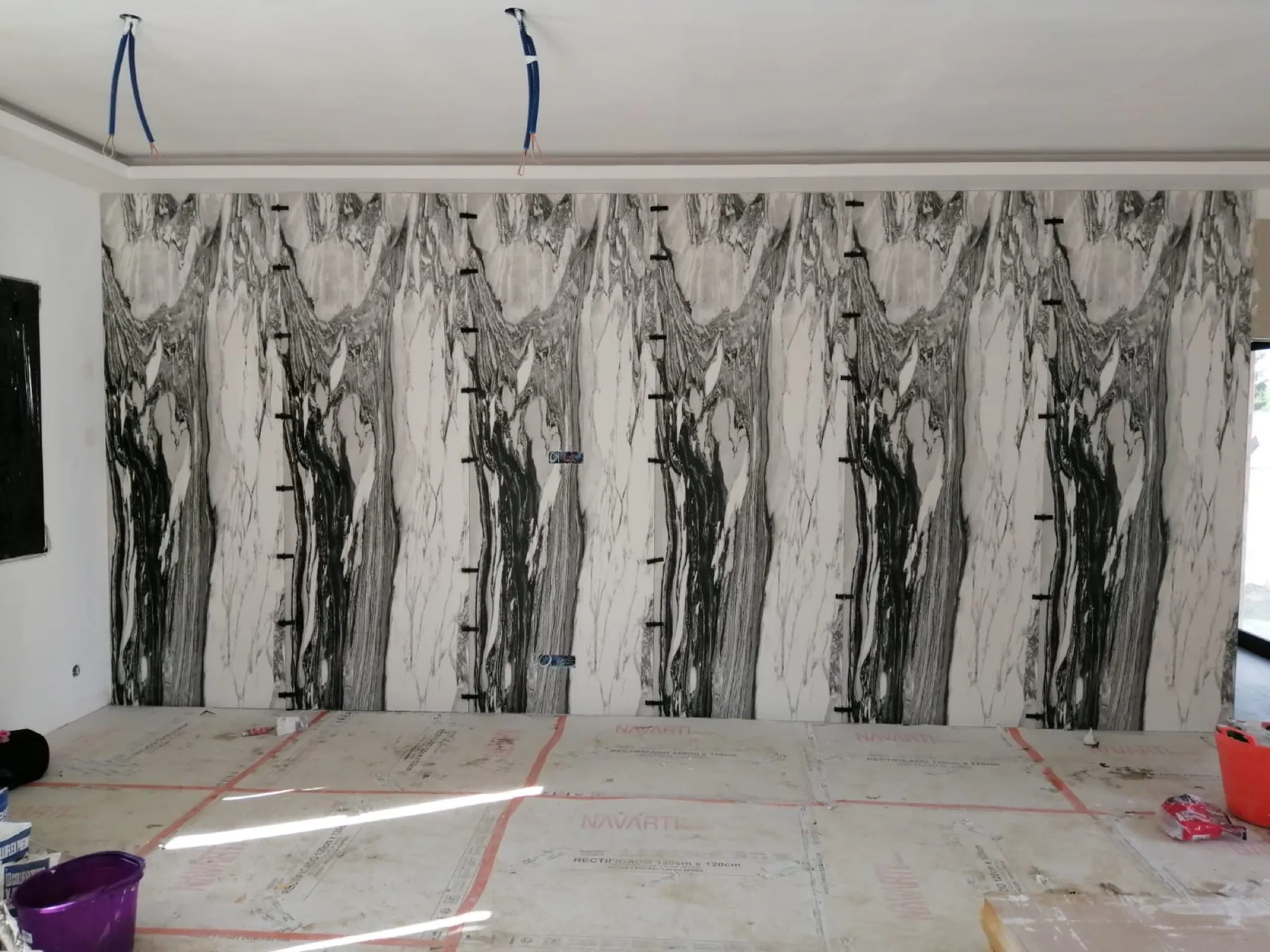
Book-match
Two consecutive slabs from the same block, opened like a book, with veins that mirror each other. The signature wall.
Tell us about your project.
Describe it, attach your plans and photos. We will get back to you personally.